Strategic Alignment: Mapping Your Solutions to Vendor Priorities for Maximum Impact
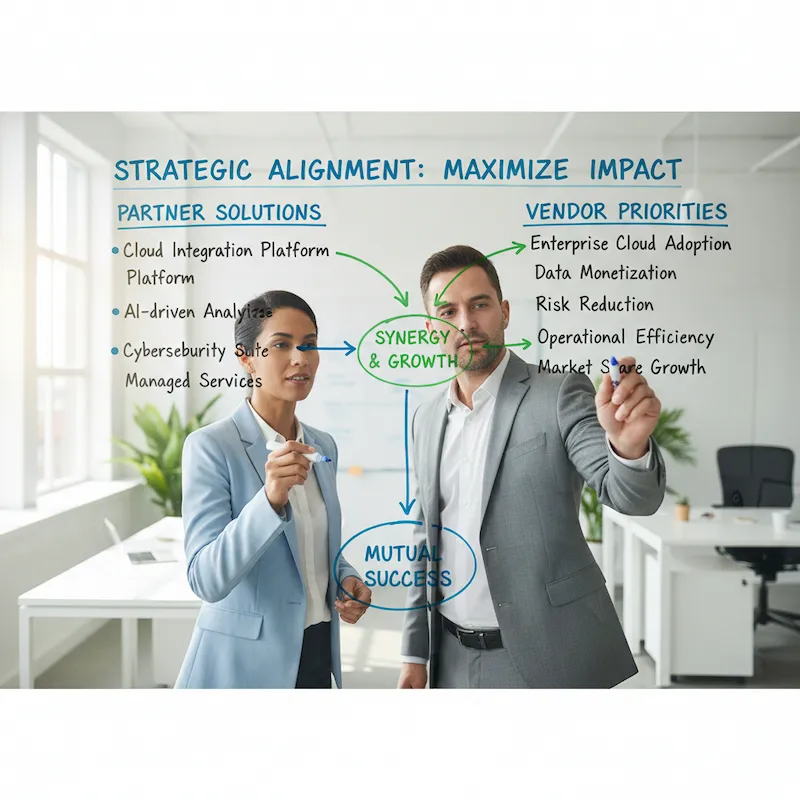
Strategic alignment defines the intentional synchronization between a partner’s solution portfolio and a vendor’s core business objectives. By mapping offerings to high-growth vendor priorities like artificial intelligence, cloud infrastructure, and cybersecurity, partners secure greater visibility and resource allocation. This alignment is critical because it shifts the relationship from a simple transactional exchange to a long-term strategic partnership that drives mutual scale. Organizations that fail to align often face diminishing support and market irrelevance, while those that master it gain access to exclusive co-selling opportunities and executive-level attention. This article explores how partners can effectively identify, map, and implement strategies to align with vendor priorities, ensuring maximum impact and sustained growth within the competitive partner ecosystem.
By Sugata Sanyal | 2026-03-10 | 5 min read
TL;DR
Strategic alignment means mapping your solutions to a vendor's core priorities like AI or cloud. This gains you access to exclusive resources and co-selling opportunities. Analyze vendor earnings and incentive programs to identify their true focus. Then, update your messaging and offerings to match, ensuring mutual growth and market relevance.
Key Insight
Organizations that align their solution roadmaps with vendor strategic priorities experience 2.5x more co-selling engagement and 40% faster pipeline velocity compared to unaligned peers. This strategic focus is critical for unlocking greater vendor support and accelerating market penetration.
1. The Imperative of Strategic Alignment in Partner Ecosystems
Vendors now reward partners who directly support their core strategic goals. Simple transactional sales are no longer enough for sustained growth, which means partners must adapt. Strategic alignment — the intentional mapping of a partner's solutions to a vendor's top business aims — has become the key to unlocking resources and executive focus. Without this, partners risk becoming irrelevant. Your future growth depends on this alignment now. The following points show why this is so critical for modern partnerships.
- Increased Visibility: Aligning with a vendor’s key initiatives, like AI or cloud expansion, places your solution in front of their executive and sales teams. This matters because it moves your company from a long list of partners to a short list of strategic allies, which means more mindshare and inbound opportunities.
- Access to Resources: Vendors assign more support to partners who help them win key markets. This includes dedicated channel managers, larger Marketing Development Funds (MDF), and priority technical help. As a result, aligned partners can scale their go-to-market (GTM) efforts much faster and more efficiently.
- Co-Sell and Co-Innovation: True alignment opens doors to joint GTM planning and co-sell motions, where vendor sales teams are rewarded for selling your solution. In turn, this can lead to co-innovation, where you build new products together because your roadmaps are strategically linked.
- Higher Partner Tiers: Most partner tiering systems heavily weigh contributions to strategic vendor products. Better alignment therefore leads to higher tiers, which unlocks better margins, rebates, and deal registration priority. The benefits are built into the system.
- Long-Term Stability: A partnership based on shared strategic goals is more resilient than one based on price alone. This stability is vital because it allows for long-term planning and joint investment, creating a durable competitive edge for both companies in a fast-changing market.
2. Understanding Vendor Priorities: A Foundation for Partnership Success
Partners cannot align with priorities they do not understand. Guesswork leads to wasted effort and missed chances, so a structured approach is needed. Vendor Priority Analysis — a structured method for finding a vendor's core objectives — is the foundation for any successful alignment strategy. You must learn how to read all the signs. The goal is to interpret these signals so that you can build a strong, actionable plan.
- Executive Communications: Scrutinize CEO keynotes, investor day presentations, and annual reports. These documents state the company's main financial and product goals for the next 12–24 months, which is why they are the most direct and reliable source of truth for your analysis.
- Earnings Call Transcripts: C-level executives tell financial analysts exactly where they are placing their bets and what markets they plan to win. Listening to these calls reveals product lines getting the most investment, which means those areas will also get the most partner support.
- Partner Program Directives: Pay close attention to changes in partner program rules, rewards, and partner enablement materials. Vendors telegraph their priorities through the behaviors they reward, so new MDF rules or sales spiffs are clear signals of where to focus your efforts.
- Product Roadmaps: Get access to the vendor's product roadmap through your channel manager or a Partner Relationship Management (PRM) portal. This shows where their R&D is focused, which helps you align your own development for future integration and co-innovation.
- Field-Level Feedback: Talk to your vendor channel managers and sales reps. Ask them what deals are getting the most executive airtime, because their answers show where strategic focus meets daily execution. In turn, this ground-level view provides context that high-level documents often miss.
3. Deconstructing Your Solution's Value Proposition
Before you can map your value to a vendor, you must first define it with precision. Many partners fail because they cannot clearly state how their product helps a vendor win, which is a critical mistake. You must define your own value proposition first. Solution Value Deconstruction — the process of breaking down your offering into specific, vendor-relevant benefits — is a key step. The goal is to build a menu of value propositions you can then map to specific vendor needs.
- Core Technical Differentiators: Identify the unique features or architectural advantages of your solution, such as a patented algorithm or superior performance. This is important because it gives vendor technical teams a solid, defensible reason to advocate for you over competitors.
- Target Customer Outcomes: Move beyond features to define the business results your solution delivers, such as 30% cost reduction or 50% faster deployment. Vendors sell outcomes, not products, so framing your value this way makes it much easier for their teams to co-sell.
- SWOT Analysis: Conduct a formal SWOT Analysis (Strengths, Weaknesses, Opportunities, Threats) for your main solutions. This forces an honest review of where you win and lose, which is why it is a vital reality check before you commit resources to a vendor partnership.
- Ideal Partner Profile (IPP) Fit: Define how your solution helps a vendor's own Ideal Customer Profile (ICP) achieve their goals. If you solve a key problem for their top customers, you become a vital part of their ecosystem, which in turn creates deep, lasting value.
- Competitive Landscape: Map your solution against both your direct competitors and the vendor's main rivals. Showing how you help the vendor win against a shared enemy is a powerful way to build an alliance, because it frames the partnership around a common, urgent goal.
4. The Alignment Matrix: A Framework for Strategic Mapping
Once you understand vendor priorities and your own value, you need a tool to connect them. A simple list is not enough to guide investment and action. The Alignment Matrix — a visual framework for plotting your solutions against vendor objectives — provides this clarity. This simple grid shows you where to act first. This framework sorts your efforts into clear action categories, so you can act with confidence.
- Axis 1: Vendor Strategic Importance: This axis ranks a vendor initiative from low to high. High-importance items are those mentioned in earnings calls or tied to executive bonuses. This ranking is critical because it ensures you focus your energy where it matters most to the vendor.
- Axis 2: Your Solution's Fit: This axis rates how well your solution supports the vendor initiative, from a weak link to a perfect fit. The rating must be honest, because overstating your fit will damage your credibility and therefore waste resources on a doomed effort.
- Quadrant 1 (High/High): Strategic Bets: Solutions in this quadrant represent the strongest alignment, so you should build dedicated GTM plans and seek deep co-sell integration here. This is where you will see the highest Return on Partner Investment (ROPI).
- Quadrant 2 (Low/High): Targeted Investments: Here, your solution is a great fit for a lower-priority vendor goal. These are good chances for quick wins with targeted MDF campaigns; however, they do not warrant a full strategic overhaul of your business.
- Quadrant 3 (High/Low): Development Gaps: This quadrant shows where a vendor has a key priority that you cannot currently support well. This is a major signal for your product team, as it highlights a clear opportunity for co-innovation or future roadmap alignment.
- Quadrant 4 (Low/Low): Deprioritize: Solutions that land here offer a poor fit for a low-priority vendor goal. You should spend minimal time on these partnerships, as they offer the lowest potential returns and will distract from more valuable opportunities.
5. Best Ways and Common Problems in Alignment
Achieving and keeping strategic alignment requires deliberate action and avoiding common errors. Ecosystem Orchestration — the active management of relationships and dependencies across a partner network — is key to turning strategy into results. Most partner programs fail at this exact stage. The following do's and don'ts provide a clear path forward, because execution is everything.
Best Practices (Do's): - Build Executive Relationships: Ensure your leaders connect with their counterparts at the vendor company. This is critical because it creates a top-down mandate for the partnership, which means problems get solved much faster when they arise. - Create a Joint Business Plan: Document your shared goals, target metrics, and GTM plays in a single plan. This creates mutual accountability and serves as a roadmap for the teams who must execute the strategy, so that everyone knows their role. - Invest in Partner Enablement: Use vendor partner enablement resources to train your sales and technical teams on the joint value proposition. An aligned strategy fails without a confident team, which is why ongoing training is vital for success. - Use an Attribution Model: Agree on an attribution modeling approach to track both sourced and influenced revenue. As a result, both parties see the full value of the partnership, justifying continued investment even when direct sales cycles are long.
Pitfalls (Don'ts): - Assume Past Success Guarantees Future Support: Do not believe that your past performance makes you immune to strategic shifts. Vendors will quickly pivot resources to new priorities, so you must realign constantly to stay relevant and funded. - Ignore the Field Teams: A strategy agreed upon by executives will fail if the vendor's field sales team doesn't know about it or isn't rewarded for it. Without their buy-in, your co-sell motions will stall, which means no pipeline will be built. - Focus Only on Your Own Goals: Approaching a vendor with a list of demands without showing how you help them win is a recipe for failure. The best partnerships are reciprocal, so you must always frame your asks in the context of mutual benefit. - Treat All Partners the Same: As a vendor, do not apply a one-size-fits-all approach to alignment. A global System Integrator (SI) has different strengths than a regional VAR, so you must tailor your GTM plays to each partner type to maximize results.
6. Measuring the Impact of Aligned Partnerships
If you cannot measure it, you cannot manage or improve it. Tracking the right metrics is key to proving the value of strategic alignment to both your board and your vendor sponsor. The right data tells a clear story for you. Return on Partner Investment (ROPI) — a metric that calculates the profitability of partner activities — becomes the core measure of success. These metrics move the conversation from perceived value to proven impact.
- Partner-Sourced and Influenced Revenue: Track revenue from deals brought in by partners and deals they helped close. Using attribution modeling to capture influence is vital because it shows the partner’s full impact beyond just the final deal registration, leading to better investment choices.
- Increased Customer Lifetime Value (CLTV): Measure the CLTV of customers acquired through aligned partners versus other channels. Aligned partners often sell stickier solutions, which results in lower churn. Therefore, these customers are more profitable over time.
- Reduced Customer Acquisition Cost (CAC): Calculate the CAC for partner-led deals. Co-selling with an aligned vendor greatly reduces sales and marketing costs, leading to more efficient growth. As a result, you can re-invest those savings into other growth areas.
- Partner Satisfaction (PSAT) Scores: Regularly survey partners to gauge their satisfaction with the alignment strategy and support. High PSAT scores are a leading indicator of future success, as happy partners invest more and are better advocates for your brand in the market.
- Ecosystem-Qualified Leads (EQLs): Measure the number of qualified leads passed between you and the vendor. A steady flow of high-quality EQLs is a direct result of aligned GTM motions and shows that the partnership is actively creating new pipeline for both companies.
7. Operationalizing Alignment: From Strategy to Execution
A great strategy is useless without strong execution. To make alignment real, you must weave it into your company's daily work, so that it becomes routine. Operational Alignment — the process of embedding strategic partnership goals into standard business systems and workflows — bridges the gap between the plan and the results. This is where strategy meets the real world. The goal is to make partnering an automatic, low-friction part of how your teams operate.
- Partner Relationship Management (PRM) Integration: Connect your systems with the vendor's PRM platform. This streamlines lead sharing, deal registration, and MDF claims, which reduces admin work and therefore speeds up the entire co-sell cycle.
- Dedicated GTM Plays: Design and run specific go-to-market (GTM) campaigns for each high-priority aligned solution. This involves creating joint marketing materials and sales scripts, so both sales teams can deliver a single, clear message to customers.
- Targeted MDF Allocation: Use Marketing Development Funds (MDF) exclusively for activities that support the aligned strategy. Instead of funding generic events, you should invest in joint webinars or proof-of-concept work, because this directly fuels the aligned goals.
- Joint Technology Integration: Use APIs and an iPaaS (Integration Platform as a Service) to create tight technical links between your product and the vendor's. This technical alignment is crucial because it creates a "better together" story that makes the joint solution more compelling.
- Aligned Sales Incentives: If possible, create sales rewards that mirror the vendor's own incentives. When your sales team is rewarded for the same behaviors as the vendor's team, their actions will naturally align in the field, which drives faster co-sell results.
8. Sustaining Alignment in an Evolving Landscape
Strategic alignment is not a one-time project; it is a continuous process of adjustment. Markets shift, vendors acquire new companies, and priorities change every year. You must always be ready to adapt quickly. Dynamic Strategy Mapping — the practice of regularly reviewing and updating your alignment framework — is the only way to maintain momentum. Companies that do this well build resilient partnerships that last through market cycles.
- Quarterly Business Reviews (QBRs): Hold structured QBRs with your vendor counterparts to review progress against the joint plan. These meetings are working sessions to solve problems and adjust priorities for the next quarter, so that the strategy stays relevant.
- Use of Predictive Analytics: Apply predictive analytics to market data and vendor signals to foresee shifts in strategy before they are announced. This allows you to proactively adjust your own roadmap and GTM, which keeps you a step ahead of other partners in the ecosystem.
- Foster a Culture of Co-Innovation: Move beyond co-selling to active co-innovation by dedicating engineering resources to explore new solutions. This transforms the relationship from reseller to true technology partner, which in turn creates a much stronger, more defensible market position.
- Monitor Ecosystem Health Metrics: Track metrics like partner engagement, the growth of joint solutions on cloud marketplaces, and the rate of new integrations. A healthy ecosystem around a vendor signals long-term stability and is therefore a good indicator of their market power.
- Succession Planning for Key Relationships: Identify the key executive and channel relationships that support the partnership and have a plan for when people change roles. Without this, a single departure can derail a multi-year effort, which is why relationship depth is key to long-term success.
Frequently Asked Questions
What is strategic alignment in channel partnerships?
Strategic alignment in channel partnerships refers to the deliberate process of ensuring a solution provider's offerings, go-to-market strategies, and operational processes are synchronized with a vendor's core business objectives and priorities. This synchronization fosters mutual growth, enhances market reach, and creates a more compelling value proposition for end customers, moving beyond transactional relationships to true collaboration.
Why is understanding vendor priorities crucial for solution providers?
Understanding vendor priorities is crucial because it allows solution providers to tailor their solutions and engagement strategies to directly support the vendor's strategic goals. This targeted approach increases the likelihood of vendor investment, co-selling opportunities, and overall partnership success. It ensures that efforts are focused on areas that matter most to the vendor, maximizing impact.
How can solution providers identify a vendor's strategic priorities?
Solution providers can identify vendor priorities through various channels. These include reviewing public financial reports and investor calls, analyzing partner program documentation, attending executive briefings, examining product roadmaps, studying sales playbooks, and understanding their customer success metrics. Direct communication with vendor leadership and sales teams is also invaluable for gaining insights.
What is an 'alignment matrix' and how does it help?
An alignment matrix is a structured framework used to map a solution provider's offerings and value proposition against a vendor's strategic priorities. It helps identify areas of strong synergy, potential gaps, and opportunities for co-innovation. This tool transforms abstract goals into actionable alignment points, guiding resource allocation and go-to-market strategies for maximum impact.
What are some common pitfalls to avoid in strategic alignment?
Common pitfalls include assuming alignment without verification, lacking specificity in articulating value, engaging in one-way communication, ignoring internal organizational silos, over-promising capabilities, adopting a static approach to alignment, and focusing solely on transactional sales. Avoiding these helps ensure the partnership develops into a sustainable, value-driven relationship.
How do you measure the success of an aligned partnership?
Success is measured through jointly defined KPIs such as joint revenue growth, pipeline contribution, customer acquisition cost reduction, increased customer lifetime value, and market share gains. Other important metrics include solution adoption rates and partner satisfaction scores. A data-driven approach ensures accountability and allows for continuous optimization of the partnership.
What does it mean to 'operationalize' alignment?
Operationalizing alignment means translating the strategic vision into practical, day-to-day activities and processes. This includes joint account planning, integrated marketing campaigns, shared sales enablement, coordinated technical integration and support, regular cadence calls between teams, and defined escalation paths. It ensures that the aligned strategy is executed effectively across both organizations.
Why is continuous adaptation important for sustaining alignment?
Continuous adaptation is vital because the business landscape is constantly evolving due to technological advancements, market shifts, and changing customer needs. Sustaining alignment requires ongoing monitoring of trends, periodic strategic reviews, collaborative innovation, talent development, and robust feedback mechanisms to ensure the partnership remains relevant and effective over time.
How does strategic alignment benefit the end customer?
Strategic alignment ultimately benefits the end customer by providing more comprehensive, integrated, and seamless solutions. It leads to a unified message, better coordinated support, and offerings that directly address their evolving needs. This results in enhanced customer satisfaction, improved business outcomes, and a stronger, more reliable partnership experience.
Can strategic alignment help reduce competitive pressure?
Yes, strategic alignment can significantly reduce competitive pressure. By offering integrated solutions that leverage the strengths of both the solution provider and the vendor, the combined entity can present a more compelling and differentiated value proposition. This collaborative approach often leads to unique market offerings that are harder for individual competitors to replicate, fostering a stronger market position.
Key Takeaways
- Vendor Priorities: Analyze earnings reports and keynotes to identify vendor priorities.
- Value Proposition: Map your value proposition to the vendor's high-growth focus areas.
- Language Alignment: Translate solution descriptions into the vendor's specific terminology.
- Sales Enablement: Target field sales with content highlighting joint customer value.
- Success Measurement: Measure success using attach rates and vendor-referred pipeline growth.
- Strategy Updates: Update your alignment strategy semi-annually to stay synchronized.
- IP Creation: Create specialized intellectual property to fill vendor product gaps.